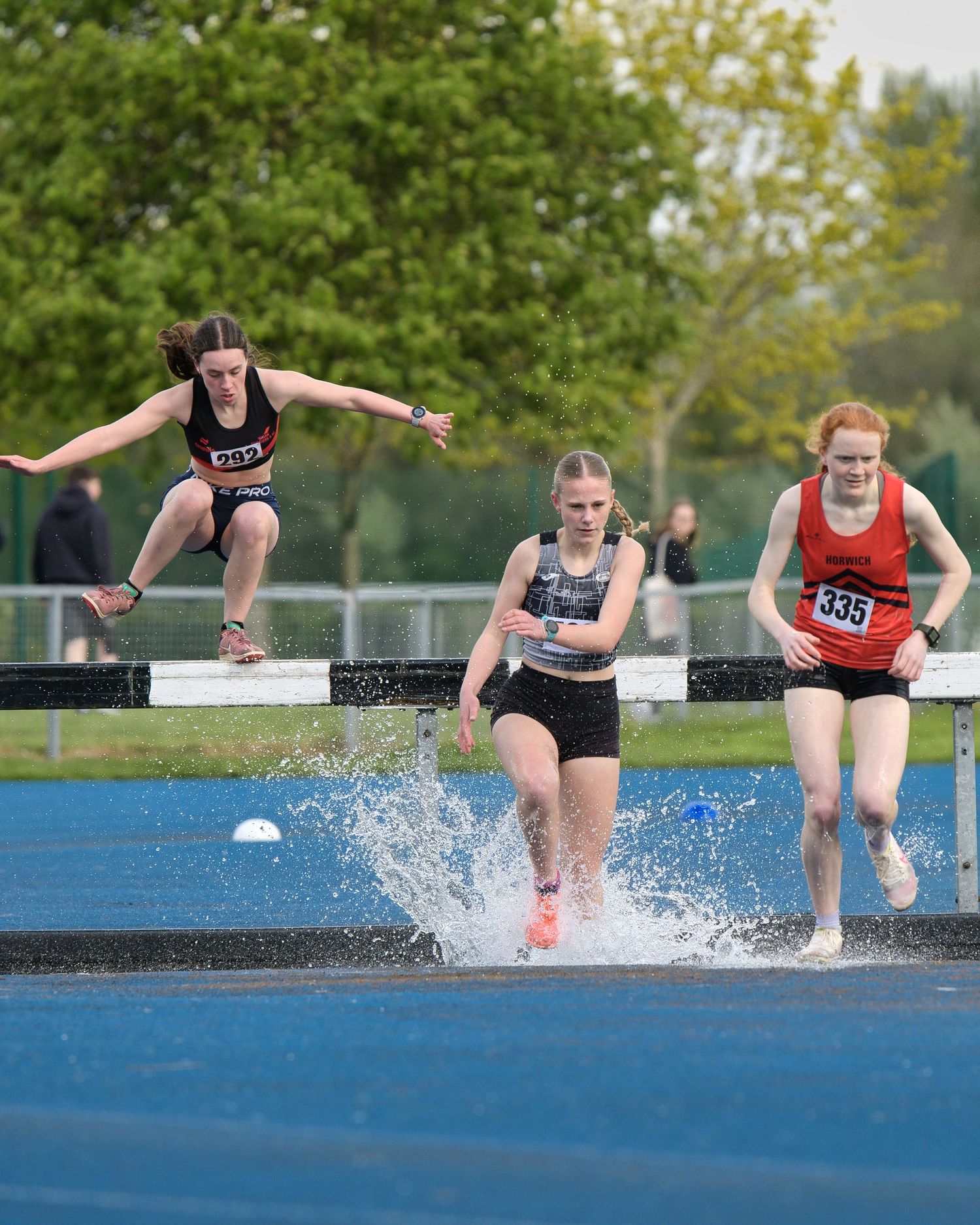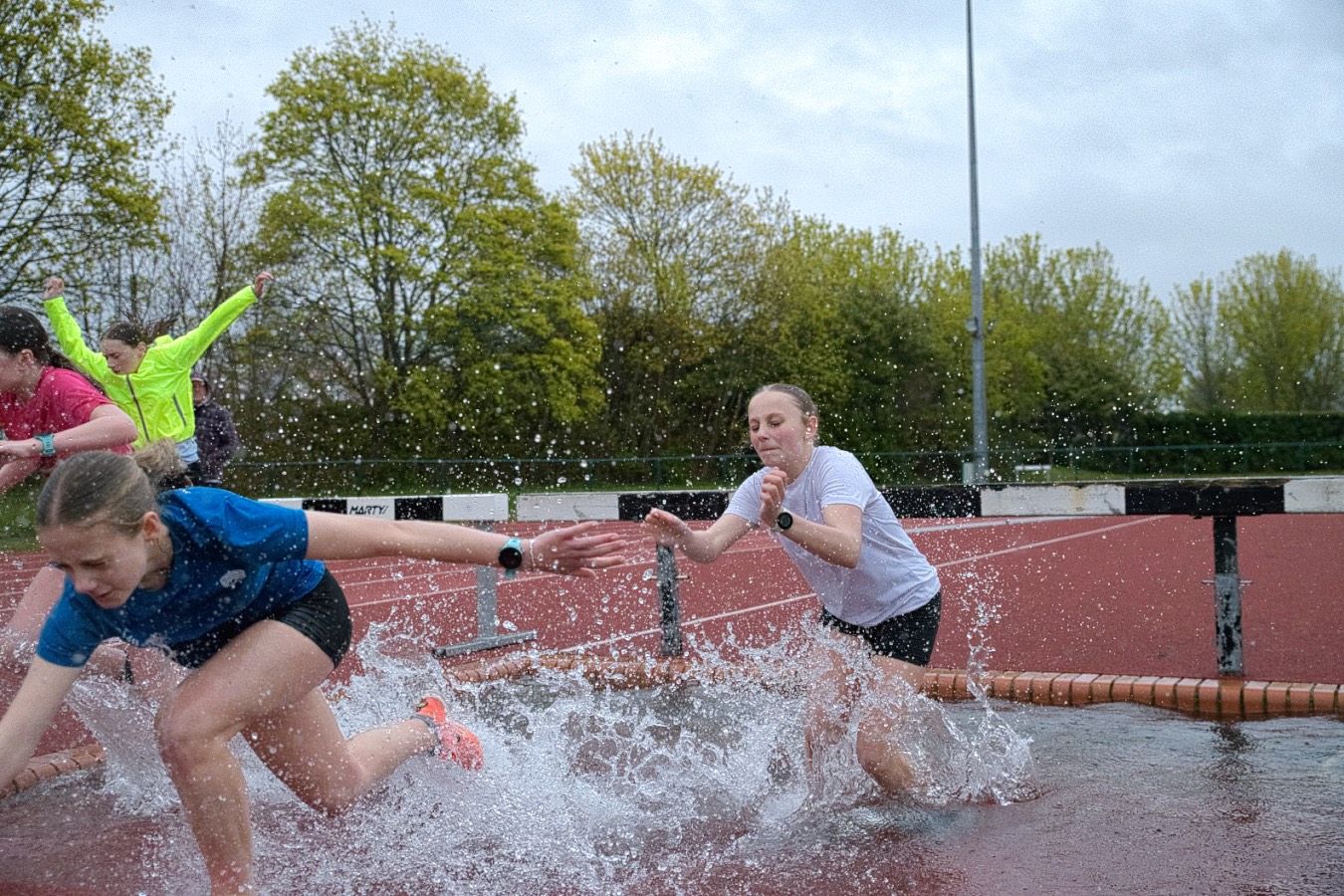
If you’ve ever tried shooting the steeplechase water jump, you’ll know it’s fast, messy, and brilliant fun all at once. This particular shoot worked out nicely for me gear-wise, where I was running a Nikon D850 paired with a Tamron 70–200mm, which was pretty much ideal given how close I could get to the water jump. That focal range let me stay tight on the action without constantly repositioning.
On a competition day, though, I may be further away, so the 200mm might still do the job, but if I’m pushed further back or need more reach, I’ll switch straight over to my 300–600mm. It’s heavy lens but always worth having that flexibility depending on access and positioning.
One thing I really love about is the D850 being full frame. It gives you a bit of breathing room where you can crop in later and still retain solid image quality. That’s especially useful with unpredictable action like this, where framing isn’t always perfect in-camera nor is proximity to the action!
In terms of settings, I keep things simple and consistent: manual mode, fast shutter with auto ISO. There’s just no time to be fiddling with ISO when the pace is this quick — especially living in windy Wales where the light can shift every few minutes. Let the camera handle ISO so you can focus on timing and composition.
I did start off shooting wide open at f/2.8, but I found pulling it back slightly to around f/4–f/4.5 improved my hit rate. Yes, you lose a bit of that ultra-shallow depth of field, but you gain a bit more forgiveness. With the water jump, the most interesting moment isn’t always exactly where you expect it, so that extra depth helps keep more of the action sharp - and lets be honest the expressions can be priceless!!
Shutter speed-wise, I was working around 1/1600 to 1/2000 sec, the photo below is 1/2500 sec and ISO 3600. The light was good on the days I’ve shot recently, so I didn’t see much noise creeping in. If I’m honest, coming from a film background I’m probably still a bit overly cautious about allowing the ISO to creep up, but the D850 handles higher ISOs far better than I sometimes give it credit for.
Next on the list for me is experimenting with a bit of off-camera flash, just enough to lift the water and add a bit of separation, but positioned carefully so it doesn’t blind the athletes as they plunge into the water. And yes it is a plunge as it’s a long way down.
So the takeaway? Shoot fast, shoot wide — but not too wide — and let auto ISO do its thing.
Happy shooting.