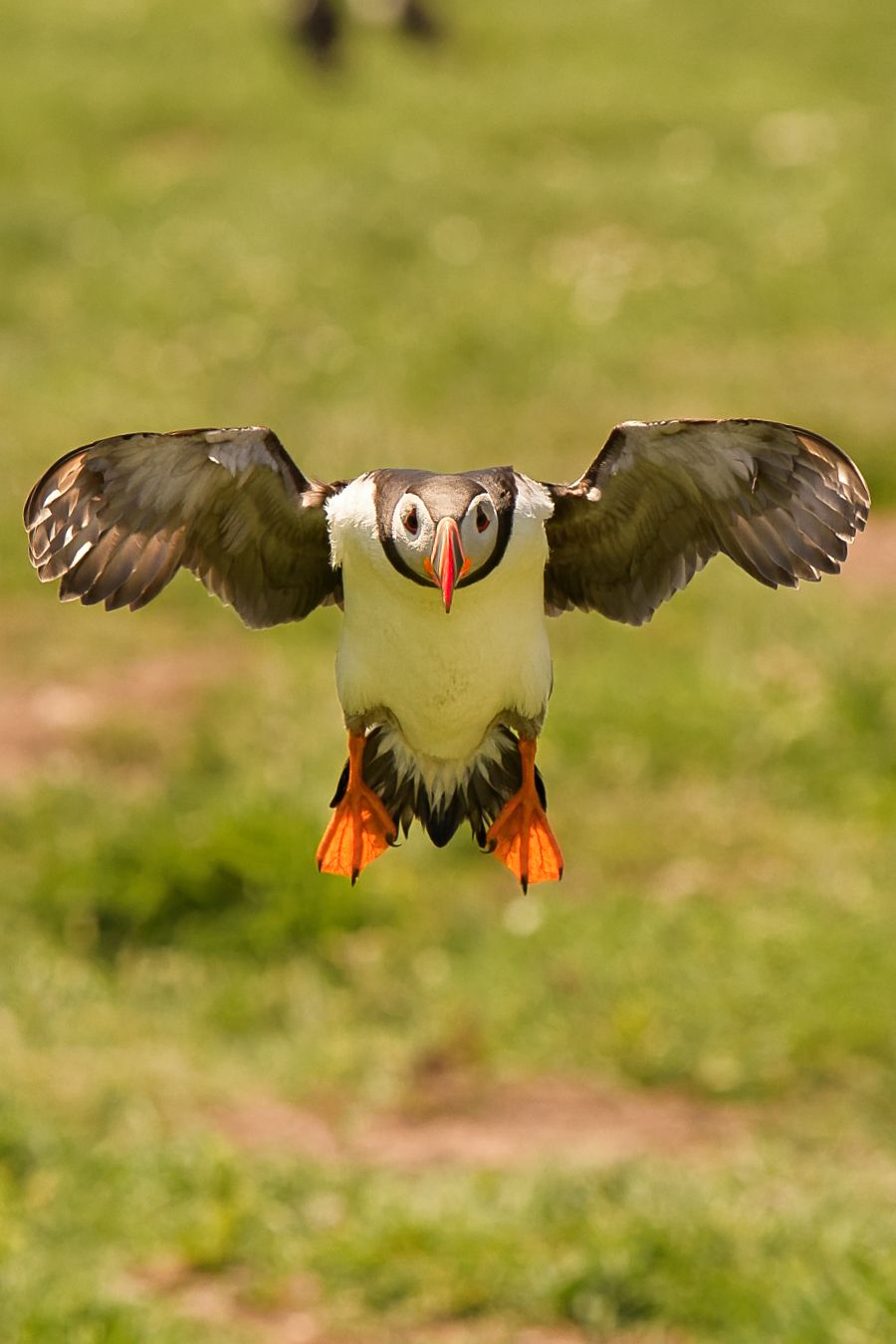
Photographing Puffins on Skomer Island
There are some wildlife encounters that stay with you long after you’ve packed the camera away. For me, photographing Puffins on Skomer Island is one of those experiences.
Living in Wales, I’d heard countless people rave about Skomer over the years, but nothing quite prepares you for just how close you can get to these remarkable birds. Within minutes of arriving on the island, puffins were wandering around completely unconcerned by the presence of people. Rather than spending hours hidden in a camouflage hide or peering through a 600mm lens from hundreds of metres away, here they simply get on with life while you quietly observe from the footpaths.
Skomer is less than a mile off the Pembrokeshire coast and is recognised as one of Britain’s most important seabird colonies. During the breeding season the island is home to more than 50,000 Atlantic Puffins, alongside thousands of Guillemots, Razorbills and the world’s largest breeding colony of Manx Shearwaters. The Wildlife Trust carefully manages visitor numbers to help protect this internationally important nature reserve https://www.welshwildlife.org/skomer-island-day-trips
The Boat Crossing
Getting there couldn’t have been much easier.
The ferry departs from Martin’s Haven and the crossing takes around twenty minutes. On a calm day it almost feels over before you’ve had chance to appreciate the stunning Pembrokeshire coastline disappearing behind you. The excitement builds as Skomer comes into view, with seabirds already beginning to circle overhead before you’ve even stepped ashore.
Parking was straightforward enough, although it pays to arrive early during puffin season as it is an understandably popular destination. The official guidance also encourages visitors to consider car sharing or public transport where possible because of the limited parking available around Martin’s Haven. Sailings can be booked through
https://www.pembrokeshire-islands.co.uk/
Photographing Puffins
If you’ve never watched puffins before, prepare yourself to smile.
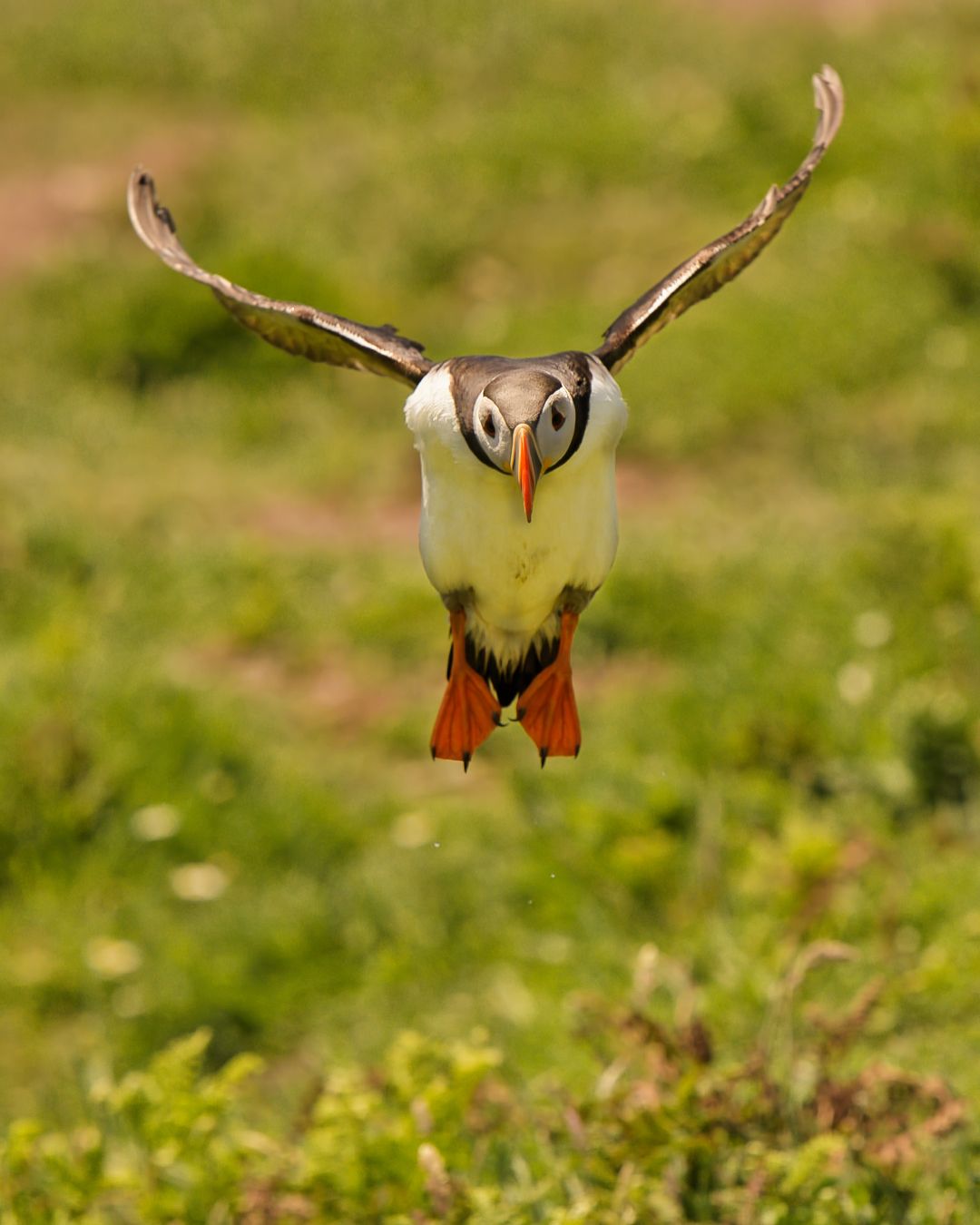
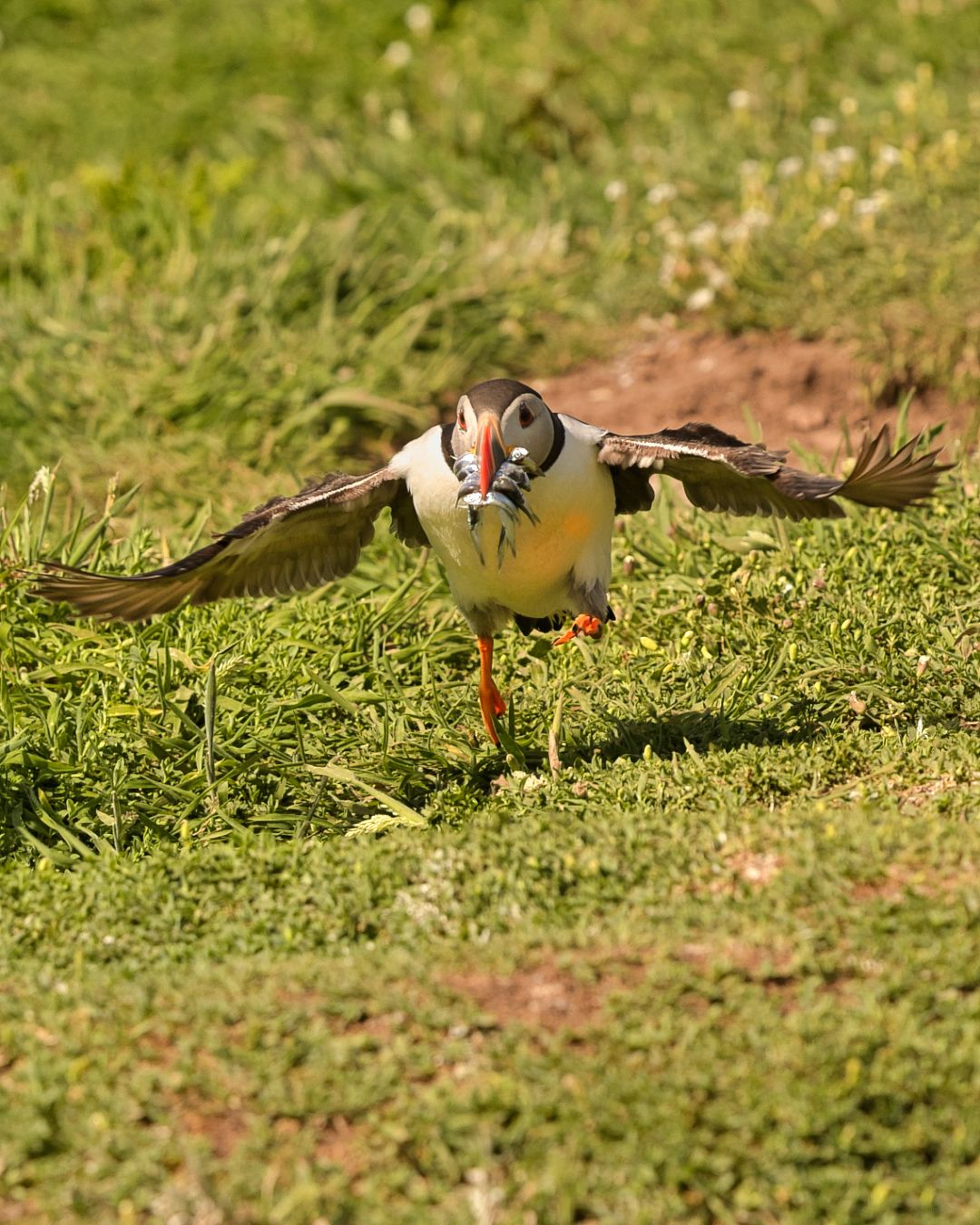
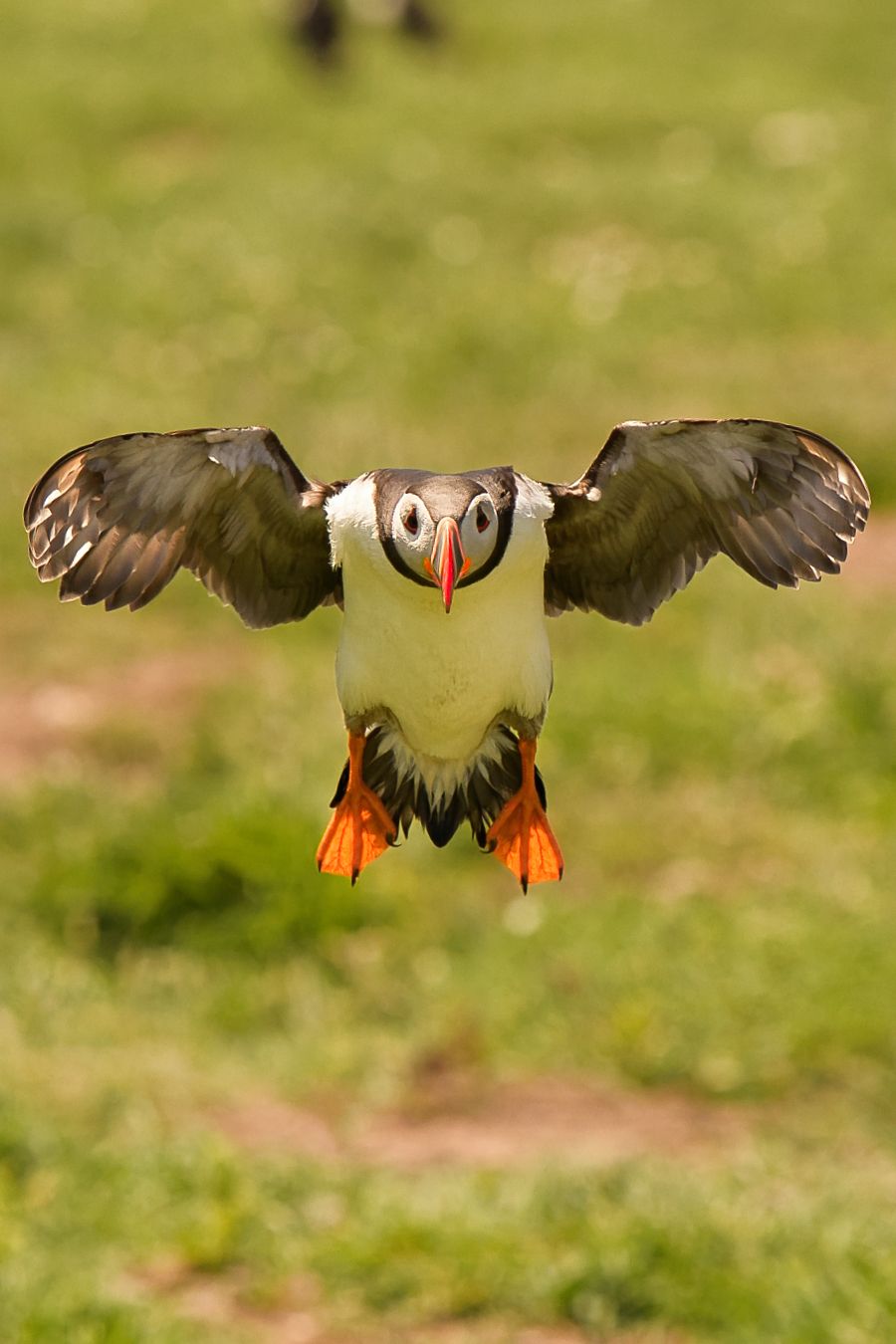
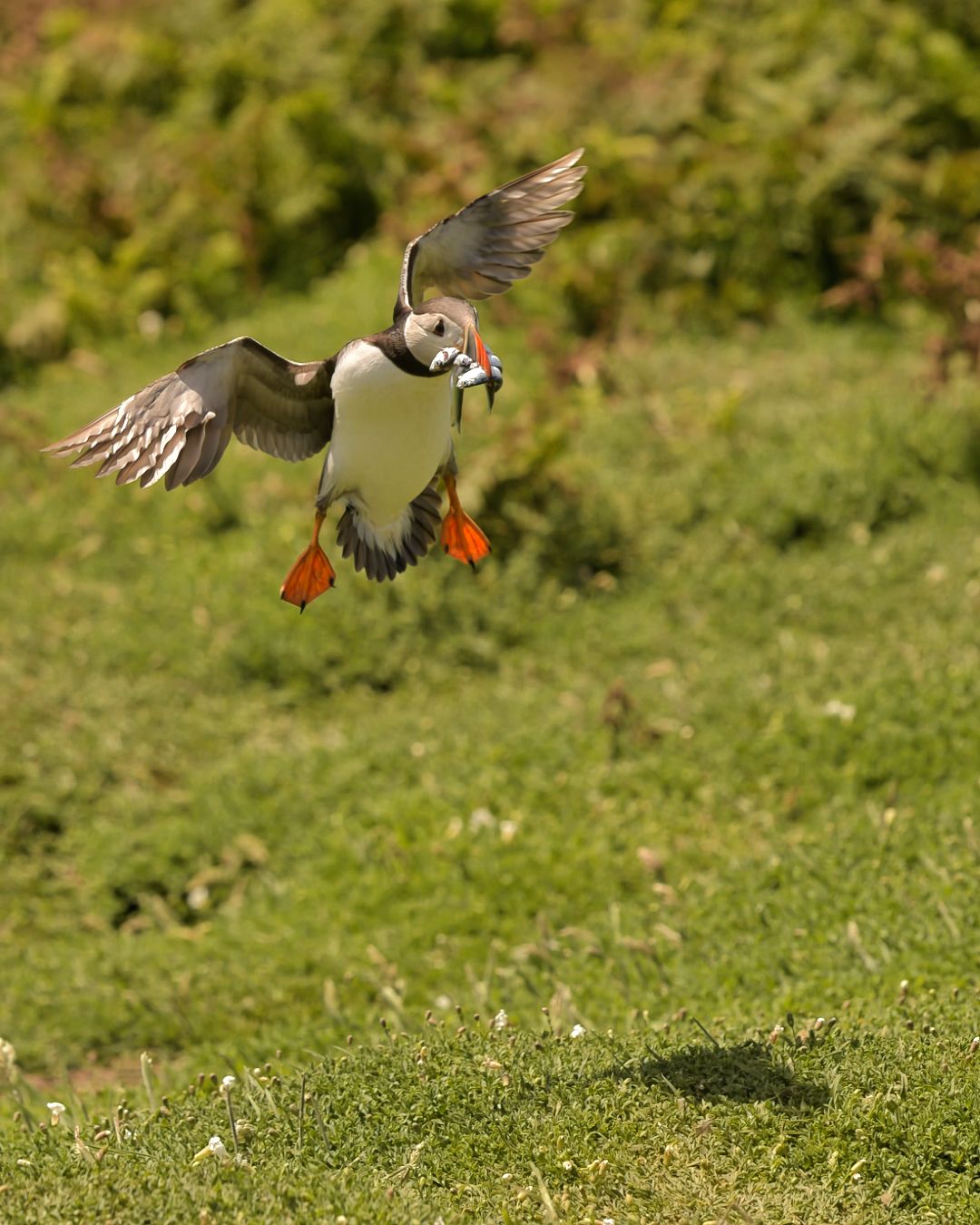
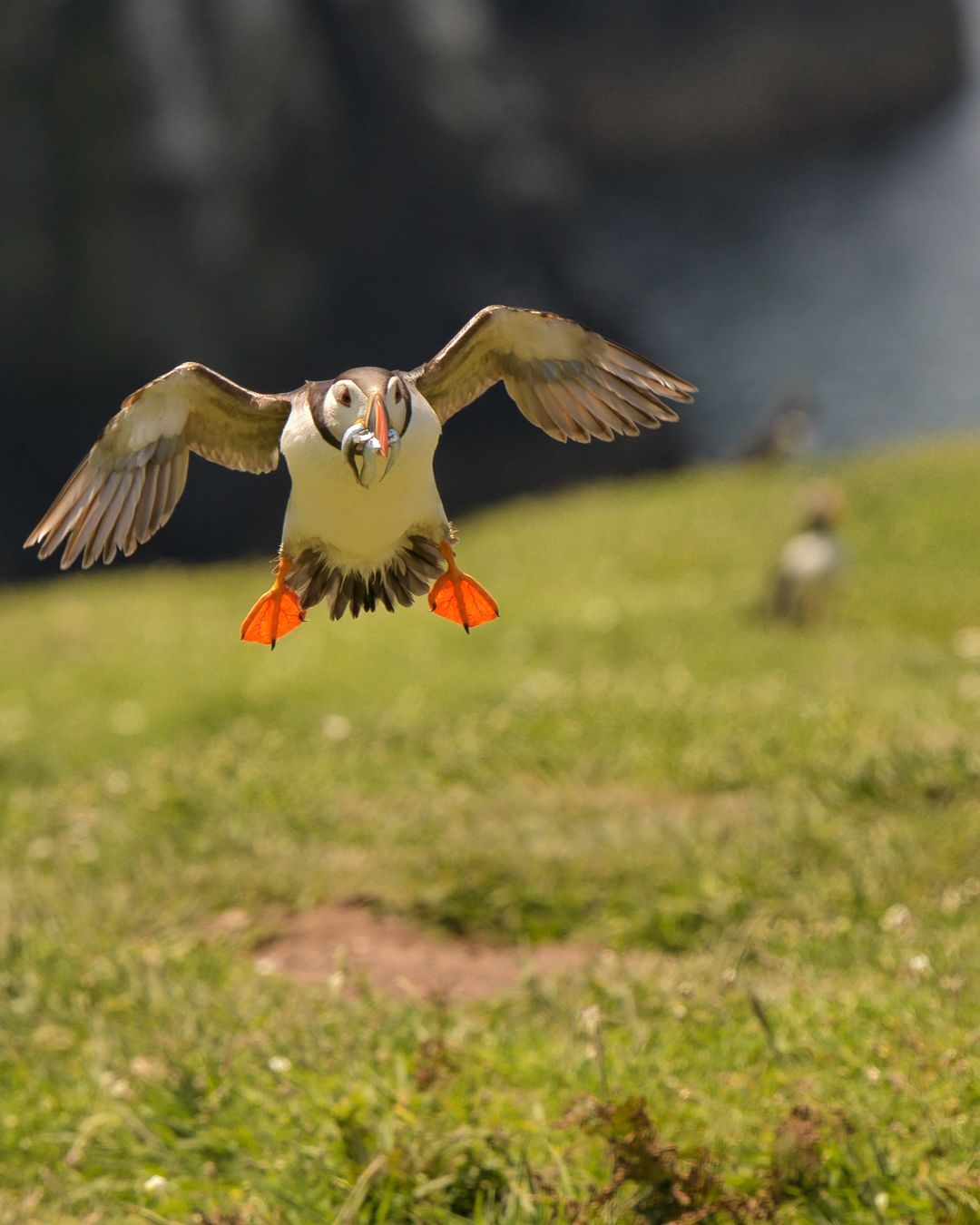
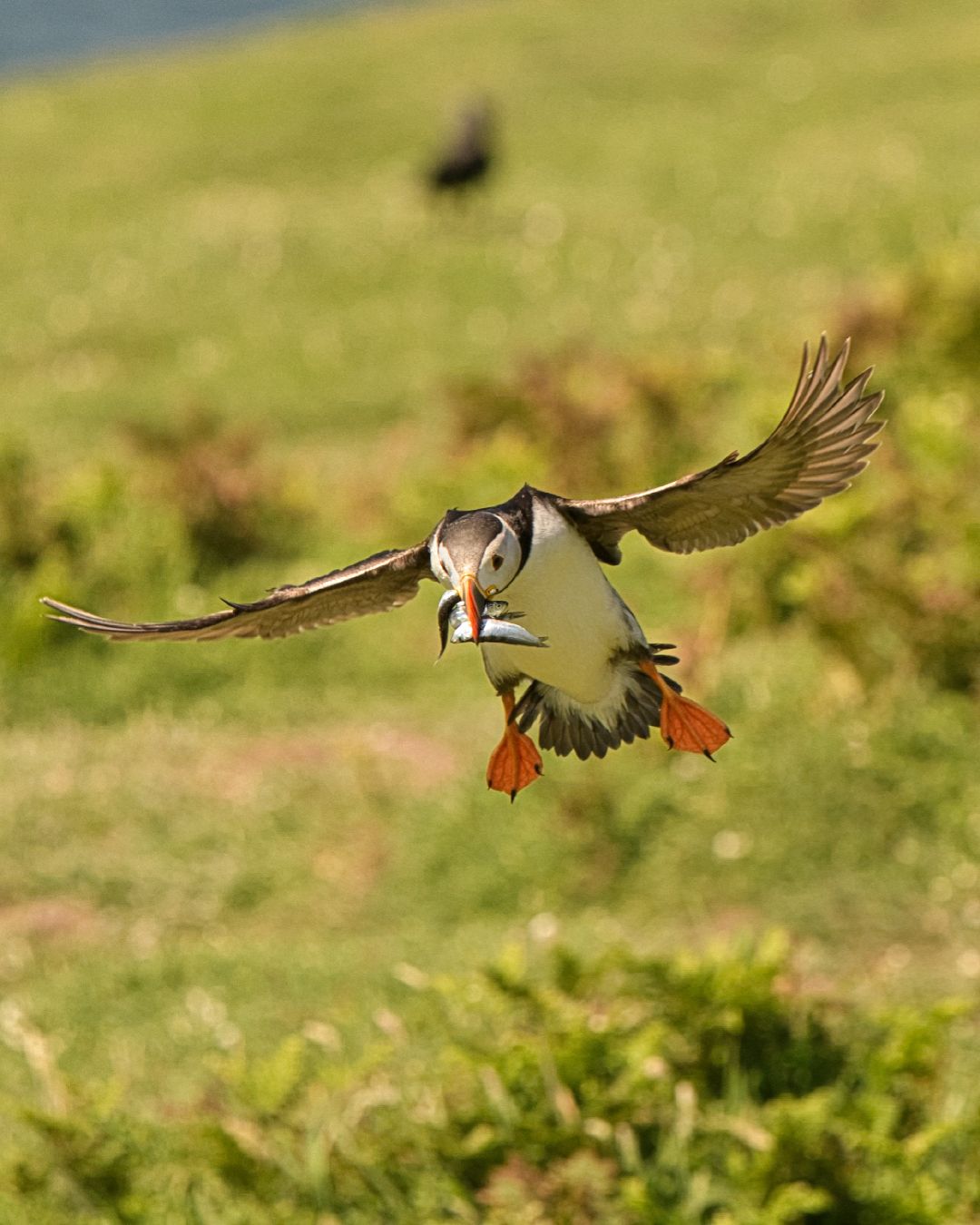
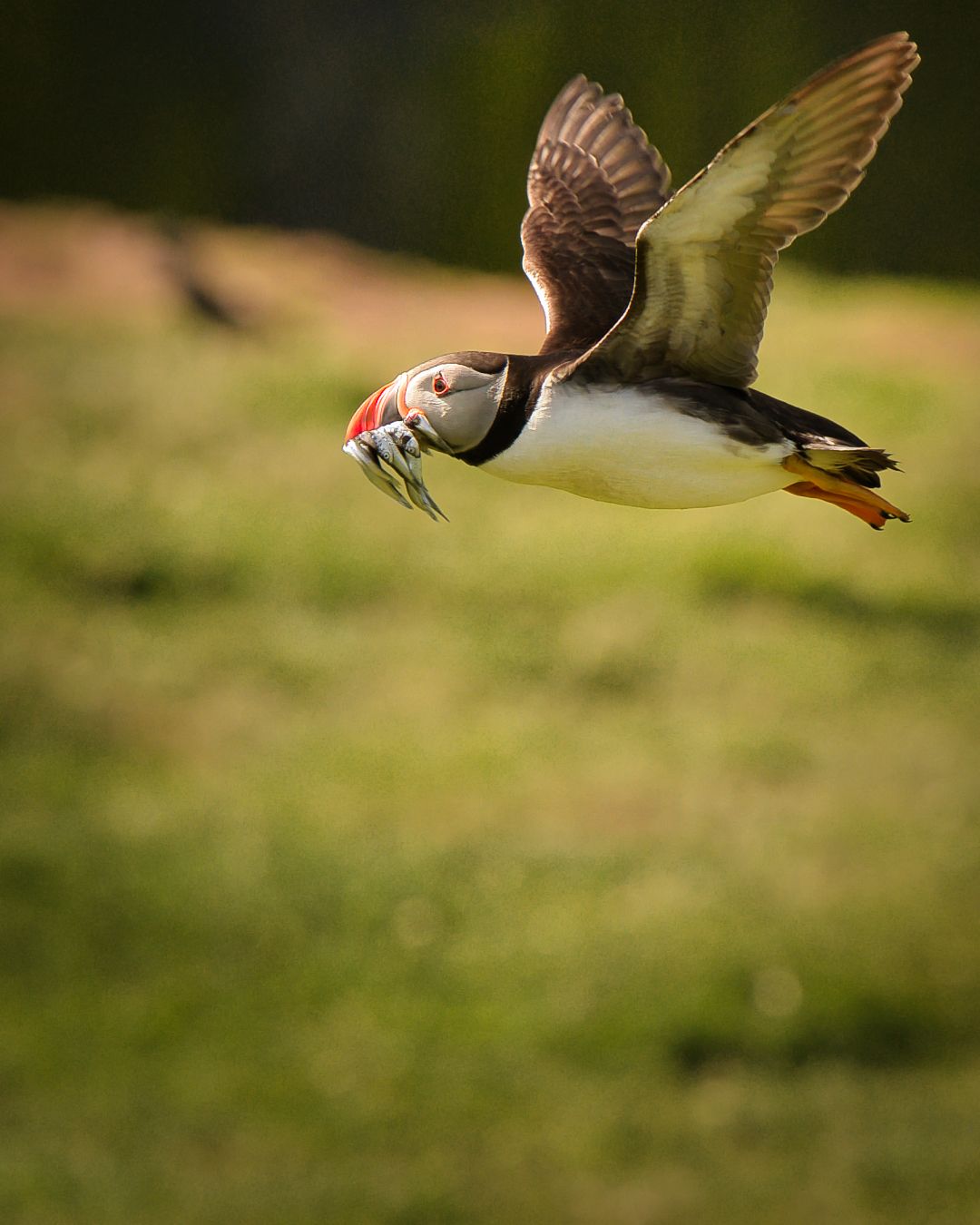
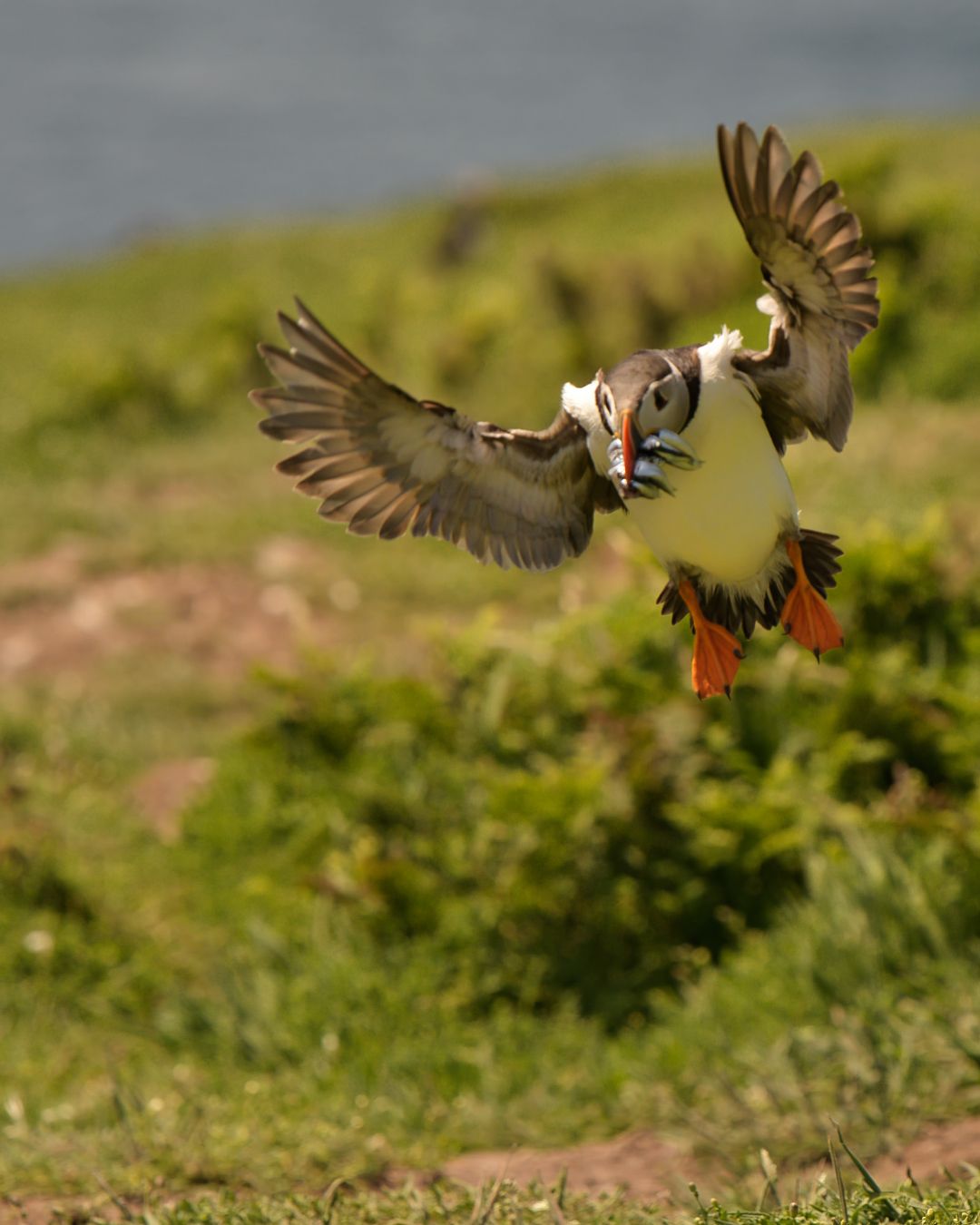
Everything about them seems slightly comical. They hurry across the paths with their distinctive waddling gait, suddenly stop to inspect absolutely nothing, then launch themselves into flight with wings beating furiously as if they’re slightly surprised they’ve managed to get airborne.
From a photographic perspective they’re surprisingly challenging despite being so close. Their movements are quick, unpredictable and often accompanied by rapid head turns or bursts of flight.
For most of my images I settled on:
* Aperture: f/5
* Shutter speed: 1/3400 to 1/4000 second
Those fast shutter speeds were essential for freezing their constant movement, particularly when they were landing or taking off. Shooting wide open also helped isolate the birds from the lush green background while keeping enough depth of field to retain detail across the face and that unmistakable colourful bill.
The real joy wasn’t simply photographing puffins it was spending time watching their behaviour. You quickly realise every bird seems to have its own personality.
Why Skomer Is Special
One of the things that struck me most wasn’t simply the number of puffins—it was how relaxed they appeared around people.
Visitors are required to stay on the marked paths, which protects the burrows where puffins nest. As a result, the birds have become accustomed to respectful human presence, creating one of the finest wildlife photography opportunities in the UK without disturbing the animals. The island also has strict biosecurity measures to prevent predators such as rats from ever reaching the island, helping safeguard these internationally important seabird colonies.
Final Thoughts
Skomer Island is quite simply one of the best wildlife days out I’ve experienced.
Whether you’re an experienced wildlife photographer or someone who simply enjoys watching animals behaving naturally, it’s difficult not to come away impressed. The short ferry journey, spectacular scenery and extraordinary access to one of Britain’s most charismatic seabirds make it worth every mile of the journey.
I’ll certainly be returning with spare batteries, plenty of memory cards, and perhaps just enough self-control to walk straight past the shop next time and not buy any unwanted puffing memorabilia.